find your foresight aptitude score

Foresight

Do you have trouble setting goals? Or do people complain about you constantly staring off into space, dreaming about the future? Maybe, on the other hand, you are afraid of the future and try not to think about it at all.  These characteristics are all related to the aptitude Foresight. 

The Foresight aptitude basically answers the question, “How do I best set goals?” Your Foresight score can help you understand yourself. How do you think about the future, set goals, and take advantage of your strengths? Knowing the answer to these questions helps you find the job that you can perform best in – and the job you do well is the one that will make you happy! Foresight is one of the many abilities that determine happiness.

Planning with Foresight

Knowing your Foresight score helps you make the most effective plans

Johnson O’Connor, a leading aptitude test researcher, says, “Those scoring high [in Foresight] should set long-term, challenging goals… Those scoring low seem to be more literal and immediate, good at getting things done in the here and now.”  

One of these descriptions may resonate with you immediately. It’s often easy to tell if someone loves dreaming about their 10-year plan or if they would rather just take it one step at a time.  

Testing for Foresight

No matter where on the spectrum you are, it’s important to take an aptitude test to be sure of your score. This is because it gives you more information and you can find out even more about yourself. For example, knowing your Foresight aptitude and your Ideaphoria score, you can find out your Divergent Thinking score. 

The Career Profiler most recommends The Highlands Ability Battery for finding out your aptitudes and abilities. The THAB calls Foresight “Time Frame Orientation.” They point out that depending on your score you may feel discouraged by working in an environment with no immediate payoff or reward. This puts you at serious risk of unhappiness and also keeps you from doing your best work. So take the test here today!

new career new job job search

New Year, New Career 2019: Factors to Consider

Historical article. The dates, pay figures and employment projections below reflect the article’s original sources. For current occupational information, consult the U.S. Bureau of Labor Statistics Occupational Outlook Handbook.

There are many reasons why someone looks for a new career. But regardless of the reason, one should always consider three main factors when looking for a new career.

1. Employment Projections

First of all, it is always prudent to consider employment projections for a potential new career. Look for a new career which is predicted to grow faster than the average. By doing so, you’ll improve your chances of getting hired, given that you have the right skills, experiences, and education or training. Check out the post on fastest growing industries in 2018. There’s also a post on the fastest growing jobs with low education requirements. The information here is a great place to get started to find data on growing industries.

Follow 3 steps to find best new career

Which new career is right for me?

However DO NOT choose a new career based on employment statistics alone. People who choose a new career solely on external factors such as employment projections often find that they are not well suited to their new career. As a result, it’s hard to succeed. They don’t get chosen for promotions, get a small bonus pay, and are often the poorest performers. In addition, when lay-offs come around, these employees are usually the first to go. Therefore, it is equally if not more important to consider personal, internal factors when deciding on a new career.

2. Career Interests

Secondly, finding out how your career interests (what you like) correlate to occupations is the best way to find a career you will enjoy and commit to in the long run. Most new career tests measure only interests. This is fine if you’re in the early stages of your career.  High school and college students should definitely complete at least one such test before choosing their college major. On the other hand, if you’re a working adult, an interest test can give you clues about where to begin the search for your new career. It is, however, typically inadequate as a stand-alone new career test. Why? Because no one chooses a new career based on “likes” alone. This is just a helpful starting point. There are plenty of other career tests that can help you find the best career for you. For example, the Bull’s Eye Career Program is a package of three tests that will give you almost everything you need to know about internal factors.

3. Internal Factors

Lastly, similar to the second point, your values, personality, and abilities or aptitudes play a large role as well. Let’s look at abilities or aptitudes first. Oftentimes we like careers for which we possess a natural ability. In other words, we enjoy work that we are naturally good at doing.

Maybe you’ve had a career that felt like an uphill battle, where you couldn’t master the techniques and nothing came easy. When this happens, it will be very difficult for you to be successful or happy. Therefore, it is useful to consider your abilities when choosing a new career. To find out why using aptitudes makes us happier, read this blog!

Many people have “demanding” abilities. These abilities unconsciously “demand” expression for themselves in a new career. If these abilities are not expressed, the worker will probably feel discontent or dissatisfied. Over time, this can slide into depression. Most people have at least one demanding ability. This is why it is absolutely imperative to take an ability career test before choosing a new career.

Personality

Your personality also plays a significant role in choosing a career. Personality career tests identify suitable careers based on more than your interests. They identify your career preferences. Career preferences account for the tendencies and predispositions of your working style. Therefore, your natural style of operating in a job is a crucial factor to consider when choosing a career.

Values play a subtle but powerful secondary role. What I mean by this is that you only notice how important your values are when you experience a career dilemma. The two most common career dilemmas are:

  1. Feeling unsure about why a career does not sound perfect even though it should
  2. When you can’t decide between two job opportunities.

Clarifying your values is the step that enables you to sort through the career dilemmas to reach a decision.

It’s a new year; I’m ready for a new career. What’s next?  

  1. Get in touch with The Career Profiler to start your journey in understanding yourself. She will help you find the right tests to measure your abilities, personality, and interests. With all of this information we’ll make a career plan guaranteed to get you a job that makes you happy and successful. If you want to get a head start, take a new career test.
  2. Find a career in which you can actually gain employment. Consult any of the blogs about finding a career in a growing industry. Don’t forget to combine the results of steps one and two. It is wisest to choose a job you will love and succeed in, as well as one where the likelihood of being hired is highest because it’s a growing industry.

New Year, New Career 2019: Top 5 Industries with the Fastest Growing New Jobs

Historical article. The dates, pay figures and employment projections below reflect the article’s original sources. For current occupational information, consult the U.S. Bureau of Labor Statistics Occupational Outlook Handbook.

The Importance of Growth Industries

If you’re looking for a new career or job, it’s easiest to find them in “growth industries.” An industry is a classification of work based on the company’s primary business activity. For example, an accounting company might have a consulting or litigation support practice, but their primary activity and source of revenue is from accounting practices. Therefore, “accounting practices” are their industry.

A growth industry is an industry that meets a certain percentage of growth criteria. This is based on percent of growth from one year to the next. This is a list of the fastest growing industries. 

The information presented here has been interpreted not by a journalist or newspaper editor, but by a career expert. Those seeking new careers in 2018 can use these employment forecast statistics as a guide in their new career exploration and decision-making. 

This ranking is based on the percentage of job growth; keep in mind that the percentage of growth is different than the number of new jobs. Some industries with greater percentage growth have less new jobs than industries with less percentage growth. You can expect to find the most jobs for your new career in the following sectors:

#1 Health Care and Social Servicesa new career in medical work might be right for you

Number of New Jobs ~5.6 million jobs
Percentage Job Growth* 3.0%
Examples of Jobs in Industry
  • Home health care service
  • Ambulatory care services
  • Outpatient care centers,
  • Outpatient mental health and substance abuse centers
  • Medical and diagnostic laboratories
  • Social Advocacy Organizations
  • Child Care Services

#2 ConstructionNew year? New career in construction

Number of New Jobs ~1.8 million jobs (#3)
Percentage Job Growth* 2.9%
Examples of Jobs in Industry
  • Non-Residential Construction Building Equipment Contractors
  • Residential Building Construction
  • Foundation, Structure and Building Exterior Contractors
  • Other Specialty Trade Contractors
  • Veneer, Plywood and Engineered Wood Products Manufacturing
  • Cement and Concrete Product Manufacturing
  • Sawmills and wood preservation

#3 Educational ServicesNew year new career education

Number of New Jobs ~820 thousand jobs (#8)
Percentage Job Growth* 2.3%
Examples of Jobs in Industry
  • Colleges, Universities and Professional and Trade Schools Educational Support Services
  • Business Schools and Computer and Management Training

#4 Professional and Business Servicesbusiness services career

Number of New Jobs ~3.8 million jobs (#2)
Percentage Job Growth* 2.1%
Examples of Jobs in Industry
  • Grant-Making and Giving Services
  • Management, Scientific and Technical Consulting Services
  • Computer Systems Design and Related Services
  • Other Professional Scientific and Technical Services
  • Facilities Support Services
  • Leasing Agents of Nonfinancial Intangible Assets
  • Commercial and Industrial Machinery and Equipment Leasing and Rentals


#5 Transportation and WarehousingNew career in transportation

Number of New Jobs ~852 thousand jobs (#7)
Percentage Job Growth* 1.9%
Examples of Jobs in Industry
  • All Transportation and Warehousing subsectors


How can I use this information?

It is best to seek a new career in an industry where there is both projected employment growth and a large number of new jobs over the next several years. These are only the top 5 industry sectors. You can use this information as only a part of the equation when seeking a new career. More information can be found here regarding 2020 employment projections.

The most important part of your job search is taking a reliable career test. There are many different types of tests that identify your best new career.  Just a few of these tests include:

  • Personality Tests: The best Personality Tests when seeking your New Career. Personality Tests help you understand yourself and what kind of environment you need to work in.
  • Interest Tests: The best Interest Tests for choosing a New Career. Interest Tests tell you what kinds of work you will find interesting and satisfying.
  • Ability Tests: The best Ability Tests and Aptitude Test when you want a to find a New Career. An Ability or Aptitude Test tells you what your innate strengths are – this kind of test is vital to getting a job that makes you happy and successful.

Another thing you can do is continue on in the New Year, New Career series. If you are interested in making a large salary, read about the best paid growing careers!

12 Fastest Growing Jobs with Lowest Education Requirements in New Year 2014 to 2020

Historical article. The dates, pay figures and employment projections below reflect the article’s original sources. For current occupational information, consult the U.S. Bureau of Labor Statistics Occupational Outlook Handbook.

There are several things on many people’s “wish list” when they think about getting a new job. One of them is a well-paid job. Another is low requirements like jobs that contain on-the-job-training with no degree. A third might be a secure job – one that will not become obsolete anytime soon, or one that is becoming more and more in demand.

That’s why in this blog we will be talking about the fastest growing jobs in the next 6 years with the lowest education requirements. If you’re changing careers, entering into a fast growing job is a smart choice. The following are the top 12 fastest growing jobs which require little education or training at the entry level. This data comes from the Employment Projections Program at the US Department of Labor.

All of these jobs require only a high school diploma at the entry level. The median average income of these 12 jobs is below $30,000 with the exceptions of #5, #8, #10, #11, and #12 which are all apprenticed construction trades.  Apprenticed trade jobs require on the job training plus some classroom education.


#12: Pile Driver Operator

By 2020: 1,500 jobs to be added for total of about 5,500 jobs

Percentage Change: 36% job growth

Median Wage: almost $48,000 annually

Is this the right career for you? Test is with the Suitable Career Test: Career Orientation Preferences System3

#11: Stonemasons

By 2020: approximately 5,500 jobs to be added for total of about 21,000 jobs

Percentage Change: over 36% job growth

Median Wage: about $37,000 annually

Is this the right career for you? Test is with the Suitable Career Test: Career Orientation Preferences System3

#10: Brick Masons

By 2020: approximately 36,000 jobs to be added for total of 125,000 jobs

Percentage Change: about 41% job growth

Median Wage: $47,000 annually

Is this the right career for you? Test is with the Suitable Career Test: Career Orientation Preferences System3

#9: Medical Secretaries

By 2020: about 210,000 jobs for total of roughly 720,000 jobs

Percentage Change: about 41% job growth rate

Median Wage: $30,500 annually

Is this the right career for you? Test is with the Suitable Career Test: Career Orientation Preferences System3

#8: Glaziers

By 2020: almost 18,000 jobs to be added for a total of about 60,000

Percentage Change: approximately 42% job growth

Median Wage: about 37,000 annually

Is this the right career for you? Test is with the Suitable Career Test: Career Orientation Preferences System3

# 7: Physical Therapy Aides

By 2020: about 20,000 jobs to be added for a total of just over 67,000 jobs

Percentage Change: about 43% job growth

Median Wage: almost $24,000 annually

Is this the right career for you? Test is with the Suitable Career Test: Career Orientation Preferences System3

#6: Plumbing and Pipefitting Helpers

By 2020: just over 26,000 jobs to be added for a total of roughly 84,500 jobs

Percentage Change: more than 45% job growth

Median Wage: almost $27,000 annually

Is this the right career for you? Test is with the Suitable Career Test: Career Orientation Preferences System3

#5: Iron Workers

By 2020: just over 9,000 jobs to be added for a total of about 28,000 jobs

Percentage Change: almost 49% job growth

Median Wage: approximately $38,500 annually

Is this the right career for you? Test is with the Suitable Career Test: Career Orientation Preferences System3

#4: Carpenter Helpers

By 2020: 26,000 jobs to be added for a total of over 72,000 jobs

Percentage Change: approximately 56% job growth

Median Wage: almost $26,000 annually

Is this the right career for you? Test is with the Suitable Career Test: Career Orientation Preferences System3

#3: Masonry Helpers

By 2020: almost 18,000 jobs to be added for total of about 47,000 jobs

Percentage Change: about a 60% job growth rate

Median Wage: almost $28,000 annually

More Information: Construction and Laborers and Helpers

Is this the right career for you? Test is with the Suitable Career Test: Career Orientation Preferences System3

#2: Home Health Aides

By 2020: just over 700,000 jobs added for a total of about 1.7 million jobs

Percentage Change: almost 70% job growth

Median Wage: about $21,000 annually

More Information: Home Health and Personal Care Aides

Is this the right career for you? Test is with the Suitable Career Test: Career Orientation Preferences System3

#1: Personal Care Aides

By 2020: about 610,000 jobs added for total of 1.5 millions jobs

Percentage Change: almost 71% job growth

Median Wage: just under $20,000 annually

More Information: Home Health and Personal Care Aides

Is this the right career for you? Test is with the Suitable Career Test: Career Orientation Preferences System3


If you’re not sure where to start or which of these careers might fit you, take this Career Preferences Test. It can help you find a suitable career based on your personality and likes.

Career Orientation Preferences System3

 

Multiple intelligence farmer

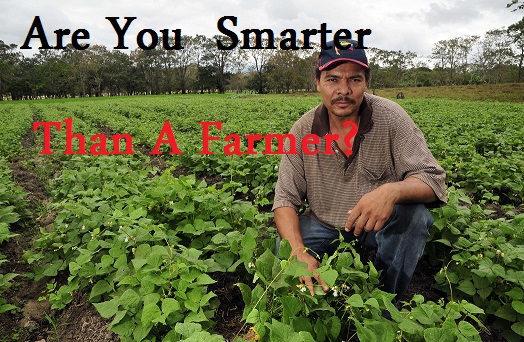
Farmers ARE Intelligent – More intelligent than you!

Farmers are often portrayed in media as ignorant, dumb, or redneck. But, in fact, farmers are some of the most intelligent professionals in the world – though maybe not in the way you’re thinking.

Multiple Intelligences

Farming is a career that requires high scores in the innate Multiple Intelligences. If you are not familiar, multiple intelligences is a new model of intelligence assessment created by Harvard professor Howard Gardner. His 1983 publication “Frames of Mind: The Theory of Multiple Intelligences” posited that rather than measuring intelligence through an IQ test, it is more accurate to measure seven different areas of intelligence: linguistic, mathematical, musical, visual-spatial, kinesthetic, intrapersonal, and interpersonal.

Multiple intelligences for career

There is a more holistic way of measuring intelligence than an IQ score – these are the multiple intelligences

Gardner’s not the only one. Many other researchers agree with him, including Buzan and Keene who outlined ten different intelligences in “Buzan’s Book of Genius.” Johnson O’Conner, through his employer the General Electric Corp, pioneered the “human engineering project.” From that research, he was the first to document that certain “intelligences” are in fact innate.

The term “multiple intelligences” reflects what The Career Profiler understands as aptitudes or natural abilities. Knowing your aptitudes is NOT a useless piece of fluffy information! They actually determine what job will make you happy and successful!

When you really think about it, it’s not surprising that farmers need to be extremely capable of reasoning. The elements dictate their every move. No amount of education can prepare one for all those unexpected events. They must rely on their “common sense” or multiple intelligences to effectively deal with a host of novel twists they face every day. Farming is an extremely difficult, demanding job.

What does it have to do with me?

Finally, you may be wondering, “So what? I’m not a farmer!” But the theory of multiple intelligences show us that in every profession, the question is NOT “How smart am I?” but rather “HOW am I smart?”

Wondering HOW you’re smart? You can find out today! The short-cut: Take The Highlands Ability Battery. Or get a FREE consultation with the Career Profiler to find out what she’d recommend for your situation. There are a lot of options: a personality test, career test, interest test, or a combination! One of these might be the best way to find out HOW you are intelligent.

A word of caution: Testing helps you KNOW how you are smart. But individualized coaching can help you USE that knowledge to find the perfect career for you. Ready to be happy and successful in your career? Get in touch with The Career Profiler today.

What Can We Learn from Donald Trump’s Handwriting?

President Donald Trump is well-known for his signature tweets – but what does his actual handwriting say about him? Trump is most recently making headlines because of his response to the death of Army Sgt. La David Johnson. Florida congresswoman Frederica Wilson and Johnson’s mother say that Trump told Johnson’s widow “He knew what he signed up for… but when it happens, it hurts anyway.” Who do we believe? Using the skill of handwriting analysis, The Career Profiler can find out.

Trump’s unique handwriting may be the most transparent thing about him. The extremely angular handwriting is a dead giveaway of his passion, outspokenness, and emotional ignorance. Generally speaking, angularity in handwriting indicates an analytical mind. However, Trump’s angularity is so extreme it shows an actual inability to identify with someone in a sympathetic or empathetic manner. He can convey words he “should” say, but fails to seek advice from others to make it heartfelt. Often, he just “wings it” and under these circumstances is almost certain to make an emotional gaffe.

What kind of handwriting does a caring, kind empathetic person have? These abilities are found in writing that consists of rounded letters with garland connections. This is the exact opposite of the current president.

People with angular handwriting often find human emotions difficult to understand. Additionally, Trump’s use of upward and sideways facing triangles are huge warning signs of a lack of empathy and emotional awareness both in himself and others.

Handwriting analysis

Donald Trump’s handwriting – the Richter-like lines and  triangles are a dead giveaway

So who can we believe? The women who heard him over speaker phone, or Trump’s own claim that the Congresswomen fabricated his words? Based on his unemotional handwriting, it is likely that Trump simply didn’t know how to properly emotionally engage with a grieving person.

But Does Handwriting Analysis Really Work?

Still skeptical? It’s not surprising. Many do not know the history and viability of handwriting as a personality assessment tool. But when The Career Profiler offers an analysis of those skeptics’ handwriting, 99% of the time they become converts.

Handwriting is simply an extension of person’s personality on paper. A skilled analysis can unlock the secrets your handwriting holds. What else would you like to know about Trump? What would you like to know about your own handwriting? Send me your requests and find answers in future blogs – an upcoming blog will look at positive aspects of angular handwriting like Trump’s. This is not the only blog on handwriting analysis – read more about handwriting analysis in your career. Sign up for notifications or follow me on Twitter and Facebook.

The Career Profiler is a handwriting analyzer

Handwriting Analysis: Case Study

One of The Career Profiler’s many skills is handwriting analysis. She recently came across a handwriting sample of an employee at financial planning firm. This sample displayed unique handwriting. It was significantly different than the norm.

Most college-aged women’s (the age range of this employee) handwriting shows that they are warm, caring, careful to be accepted, and intelligent. But in this particular handwriting sample, The Career Profiler saw what she called as aggressive intelligence. The handwriting indicated an intelligence that was sharp and highly perceptive – more so than any other sample she’d seen. It demonstrated the writer critically analyzed every concept, idea, opinion, and piece of data. This analysis can be done

Handwriting analysis career

To an untrained eye, most handwriting is simply legible or illegible. To The Carer Profiler, your handwriting is an entire world describing you

automatically, as an instinctive response. With these analysis skills, the employee could easily find flaws in data. This is a talent any employer, especially a financial services company, would love to hire. Or is it?

What’s “Wrong” with That?

The problem was, there was one particular letter in her handwriting that indicated she would use information to her advantage at the expense of others. With a high level of character, this person would be an opportunist. But if her character were of an average or low level, this person would be cunning and deceitful.

What would this look like at work? She would see a weakness in a work relationship and take advantage of it in some way. If she disliked someone, she would exploit that person’s weakness to gain the upper hand – a promotion, or even secure her adversary’s firing. If her work involved handling money, she might quite naturally take the path of embezzlement. Of course, this boils down to a character issue, but it was through handwriting analysis that The Career Profiler could alert both the employee and her employer of this personality tendency.

The Bottom Line: Know Yourself and Your Employees

The same kind of information can be found for you! Do you want to know more about yourself or your employees? Do you want to protect your company and find the best employees? As in this example, you might be warned of the early signs of a problematic worker. Or you can keep an eye out for personal flaws that you were previously blind to.

With over twenty years of experience in career coaching, The Career Profiler has all the tools she needs to help you know yourself and your business. You can send a handwriting sample to her today. In the analysis consultation, she will walk you through the meaning of your handwriting and what it tells about your work performance, personality, and abilities. Take advantage of all the ways you can know yourself! Get your handwriting analyzed today.

In addition to handwriting, The Career Profiler knows all about aptitude tests, career tests, and personality tests. The Highlands Ability Battery is one of the main tools in her toolbox and is a great way to find out more than just your handwriting. You can take THAB today too!

Thinking Series: Careers for Convergent Thinking

Now that we have looked at Classification and Concept Organization separately, let’s see what careers are available for the whole spectrum of scores.  Want to be a successful writer?  A teacher?  Have a specific career in mind?  Double check that the career you desire uses the scores you have in Classification and Concept Organization. If you still don’t know your Convergent Thinking score, take The Highlands Ability Battery today!

Convergent Thinking is a driving ability, which means that if you pursue a job that requires a CL or CO score you do not have, you will not be very happy or successful in that job!  Find out if you are an inductive reasoner or a process thinker, a decisive reasoner or deductive reasoner.  Then consider a job that uses both of those aptitudes.

Which reasoning combination are you?

High Classification, High Concept Organization

High Classification, Low Concept Organization

Low Classification, High Concept Organization

Low Classification, Low Concept Organization


High Classification, High Concept Organization

These thinkers think “to the max.” They are called consultative because of their ability to solve problems quickly and explain well to others. A lot of outlets are needed through which to express their full-steam-ahead way of organizing, thinking, and explaining. Take note that follow-through is not your strong suit. You are better at thinking up solutions to problems, not implementing those solutions.

Find a career that requires solving lots of problems quickly and explaining the ins and outs of them. Consultative thinkers are known as the classic “law combination.” The Highlands Ability Battery notes: “A lawyer sizes up the facts of a case, works with curveballs along the way, and must communicate with clients, other lawyers, and judges their rationale.”

The Consultive combination: the law combination.

Many professionals who score high in Concept Organization are in the sciences and mathematics. Other careers include engineers, accountants, secretaries and office managers, writers and editors, teachers, travel agents and tour planners, event planners, political and advertising campaign planners, and computer programmers.

Adjust to your high Classification need to explain problem-solving by working in environments within these fields that require human interaction. For example, a computer programmer might find a niche in customer service, where she could explain solutions to customers. Accountants can find a niche in financial advising, where they discuss the solutions to financial problems.

High Classification, Low Concept Organization

This combination is called diagnostic, which gives you a clue as to what kind of job would suit this person. A medical doctor can use these aptitudes to come with the solution to a problem quickly. She can put many seemingly unrelated pieces together and come up with a diagnosis.  Unlike the consultative combination, these people find

Doctor profession

High classification, low concept organization: Diagnostic

it tiresome to explain their reasoning to others. They would rather just connect the dots, solve the problem, and move on with it! According to Highlands Ability Battery test-takers, diagnostics feel “at home in fast-paced environments [requiring] a strong need to problem-solve.”

However, their low Concept Organization sets them apart from consultants in that diagnostics are not always great at explanations and communication. Like a doctor, they’d rather figure out the problem, prescribe the solution, and go to the next patient! If you are a diagnostic thinker, take this tendency to not communicate well into account and try to find a way to minimize that kind of activity in your job.

Low Classification, High Concept Organization

“Naturally logical in problem analysis and thorough in ensuring all things have been considered, [the Analytical combination] can be slower to arrive at conclusions.” These well-organized, thorough thinkers

analyst combination

Low classification, high concept organization: Analytical

work better in slow environments.  These thinkers are analytical. Most careers will reflect this title: financial advisors who analyze a financial situation and discuss solutions with their clients. Or

statisticians who think through all the information before forming a conclusion. They go deeper in problems, more slowly. They are excellent researchers, in it for the long haul.

If you are an analytical thinker, be sure that your job provides you with enough time and depth to understand information. If you work in a fast-paced environment that is only interested in surface-level explanations, happiness and success will be hard to come by!

Low Classification, Low Concept Organization

Don’t overlook these “low” scorers! Called experiential workers, they gather most of their knowledge and problem-solving ability from past experience. The Fundraising Coach says, “This is probably the ideal executive or managerial problem-solving type. Given their ability to apply past experiences to present situations, it may be advisable for people with this combination to get as much varied work experience as possible early on in their careers.”

Low Classification, Low Concept Organization

Experiential thinkers can make great teachers

They tend to be patient with people, and thus are usually better implementers than the impatient diagnostics or consulters. The latter are better at brainstorming ideas, rather than following through with a plan. Experiential thinkers often find success as teachers. After years of teaching experience, they know how to address a learning block and how to best approach explaining a concept to students.

What Now?

Now you know the many careers that best fit people with different combinations of Classification and Concept Organization thinking. This information is highly valuable for people who are looking for a new job, trying to improve in their career, or are planning their career trajectory.

If you don’t know your Classification or Concept Organization scores, it’s time for you to find out! The Career Profiler recommends The Highlands Ability Battery as the best aptitude test. Then you can get a FREE consultation with her to discuss your results. If you already know your Convergent Thinking score but are not sure how to apply it to your life, a meeting with The Career Profiler will help you! Make a plan that guarantees happiness and success in your career.

Concept Organization aptitude test

Thinking Series: Concept Organization

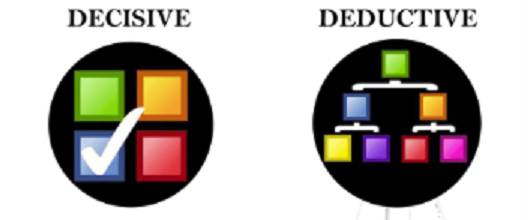
In our last blog we looked at Classification, which is how a person organizes information. This week, we’ll learn about Concept Organization, or CO. Similarly to Classification, CO measures the ability to organize concepts and arrange ideas in logical sequence. The Career Profiler differentiates between low CO scorers and high ones. She calls low CO scorers decisive reasoners and high CO scorers deductive reasoners.

Deductive Reasoners

These high CO thinkers go through all the logical steps before making a decision. While this is thorough, it can be hard for them to make a decision because they take so many different elements into account. They have highly organized minds and well developed internal organization systems. But this doesn’t always translate to an organized workspace. They’re good at organizing systems and plans into logical steps. Creating structure is where these thinkers thrive.

Concept Organization aptitude test

Concept Organization tells how you receive and organize information and then make decisions

Decisive Reasoners

On the other hand, decisive reasoners prefer to walk into a situation that has already been organized for them. Going through all the thorough steps it takes to organize a problem and find the solution is not for them. The single most important element in a decision or problem jumps out at them so they don’t have to weigh all the possibilities.

They are much more decisive for this reason and don’t ponder over what decision to make. The right decision jumps out at them quickly because they are constantly thinking about the “bottom line.” 

When communicating with a decisive reasoner, cut right to the chase – that’s all they care about! They don’t want to go through all the rationale of a decision you made or the reasons why they are being assigned the task you are giving them.

Decisive reasoners complete one task at a time (in order of importance), rather than multi-tasking like many high CO thinkers do. They can get overwhelmed if too much is expected of them at one time.

But How do They Work?

We will answer this question in our next blog, which will bring together Concept Organization with last week’s Classification! As you know, you should never pick a career based on only one attribute or personality factor. It’s important to know how your many interests, aptitudes, and abilities can work together to make you happy in successful in a career. As driving abilities, it is even more important to understand how these two can help you find the right job for you. If you are ready to find out about your strengths and find the perfect job for you, you can start with The Highlands Ability Battery. This is an ability test that the Career Profiler loves. Stay tuned for our Thinking Series Part III: Careers for Classification and Concept Organization!


Classification aptitude test ability test

Thinking Series: Classification

You may not have thought of this before, but the way we think has a huge impact on our lives. Oftentimes we only consider whether or not a person is thinking, not how they are doing it. But this has huge consequences!  Classification is an aptitude that answers the question “How do I organize my thoughts so that I solve problems?” Knowing the answer to this question actually helps you succeed and be happy in life.

Welcome to the Thinking Series that explores the many ways of thinking and how they are understood in the career world. Career tests call these ways of thinking by different names, though they may be talking about the same way of thinking. The Highlands Ability Battery, for example, calls them abilities. Other tests call them aptitudes. But both refer to the same phenomenon: the innate skills that determine what kind of career you can excel in.

Classification

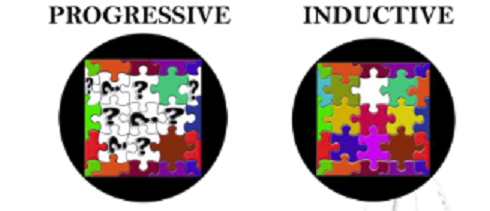
Today we’ll be looking at what The Highlands Ability Battery calls Classification. The Career Profiler, however, differentiates between a high and low score in Classification. She calls a high score in Classification inductive thinking, and a low score in Classification process thinking.

Classification is the organization of ideas into different classes or compartments. When a person tests low in Classification (process thinking), you can think of them as sitting in front of two boxes and deciding if an object belongs in one or the other.

Low Classification (Process Thinking)

Process thinkers

Those who score low in Classification are process thinkers. They organize ideas meticulously

Process thinkers categorize in the following ways:

  • ask appropriate questions
  • patient with the process of organization
  • feel comfortable with structures and rules
  • think in a step-by-step way

In the workplace, this kind of person is easy to manage and often works well in a position that uses tried-and-true methods of procedure. Sometimes they can come off as slow thinkers or workers. But this does not mean they are not intelligent. It’s simply that compared to those who score high in Classification, they are perhaps not as noticeable.

High Classification (Inductive Thinkers)

Those scoring high in Classification (inductive thinkers) bring to mind, in juxtaposition to low Classification, a whirlwind. These are the kind of people who “get” things easily and quickly. Inductive thinkers:

  • Recognize problems and answers almost immediately
  • Are fast thinkers
  • quick problem-solvers
  • become impatient or bored in slow environments
  • Sees pros and cons easily
  • Finds commonalities among different things

It’s easy for them to follow a common thread in a sea of information, forming conclusions based on those relationships very quickly. On the negative side, they sometimes have difficulty following through on an idea, or slowing down to learn a process. Unless they have a high vocabulary, they often have trouble

Inductive thinkers connect puzzle pieces easily

explaining themselves and their reasoning. Without vocabulary or lots of knowledge, they may not know exactly why they are right about something. Like other kinds of reasoning abilities, this aptitude is dependent on knowledge for its proper use. To be able to make the diagnostic leap from symptoms to disease, for example, a doctor first has to know the disease. People with inductive reasoning and little knowledge generally face continuing difficulties.


The Series

Our next blog, Concept Organization, looks at a different style of thinking. Like Classification, those who score low and high on this test are called by different names: deductive reasoners vs. decisive reasoners. Then we will look at what happens when these four ways of thinking are paired with each other to make Convergent Thinking.

Why It Matters

You may be thinking, “this is a lot of jargon for some silly personality stuff.” But it’s not just jargon, and it’s not even just personality. These aptitudes determine how you function in the world – in your career, your relationships, your education. They help you understand yourself and the people around you.

If you are in a leadership position in your company, it helps you understand how to get the best work out of your employees. If you’re an employee struggling with your work load or feeling bored and dissatisfied with your job, it helps you understand how to best engage with your work and succeed. All of these things lead to career happiness. The Career Profiler wants to help you achieve success and happiness! Find out what your Convergent Thinking style today by taking The Highlands Ability Battery. All of this information is tied together in Convergent Thinking, the combination of Classification and Concept Organization. It will give you an even more detailed picture of the best job for you.